


DID YOU KNOW THIS ABOUT… ENGLISH?
There is a completely unique English dialect spoken only on Tangier Island, Virginia. It is said to be almost the same as when the island was settled in 1686 and can be unintelligible even to native English speakers.
According to the US company Global Language Monitor (GLM) a new word in the English language is created about every 98 minutes.
The English language is likely to contain the most words of all languages, according to the Oxford English Dictionary, and estimates for the number of words range from one to two million.
The word “like” can be used as a noun, verb, adverb, adjective, preposition, particle, conjunction, hedge, interjection, and quotative.
Aoccdrnig to a rscheearch at Cmabrigde Uinervtisy, it deosn’t mttaer in waht oredr the ltters in a wrod are; the olny iprmoatnt fatcor is taht the frist and lsat ltteres be at the rghit pclae. The rset can be a total mses and you can sitll raed it wouthit a porbelm. Tihs is bcuseae the huamn mnid deos not raed ervey lteter by istlef, but the wrod as a wlohe.
Or
According to a research at Cambridge University, it doesn’t matter in what order letters in a word are written;. the only important factor is the the first and last letters be in the right place. The rest can be a total mess and you can still read it without a problem. This is because the human mind does not read every letter by itself but the word as a whole.
For more than a century, the English aristocracy couldn’t speak English. William the Conqueror tried to learn English at the age of 43 but gave up. He didn’t seem especially fond of the land he had conquered in 1066, spending half of his reign in France and not visiting England at all for five years when in power. Naturally, French-speaking barons were appointed to rule the land.
Within 20 years of the Normans taking power in England, almost all of the local religious institutions were French-speaking. The aristocrats brought with them large retinues and were followed by French tradesmen, who almost certainly mixed bilingually with the English tradesmen. In turn, ambitious Englishmen would have learned French to get ahead in life and mix with the new rulers. Around 10,000 French words entered English in the century after the Norman invasion. There is little to suggest that aristocrats themselves spoke English. It isn’t until the end of the 12th Century that we have evidence of the children of the English aristocracy with English as a first language. In 1204, the English nobility lost their estates in France and adopted English partly as a matter of national pride.
Before the year 1000, the word “she” didn’t exist in the English language. The singular female reference was the word „heo,“ which also was the plural of all genders. The word „she“ didn’t appear until the 12th century, about 400 years after English began to take form. „She“ probably derived from the Old English feminine „seo,“ the Viking word for feminine reference.
One man is credited as being largely responsible for the differences between American and British spelling. Noah Webster, born in West Hartford, Connecticut in 1758, believed that a great emerging nation such as the USA needed a language of its own: American English. Webster found the English in the textbooks of the time to be corrupted by the British aristocracy, with too much French and Classical influence. He was to write American books for American learners, representing a young, proud and forward-thinking nation. Between 1783 and 1785, he produced three books on the English language for American schoolchildren. During his lifetime, 385 editions of his Speller were published.
The modern US spelling of color was initially spelt in the British way, colour, but this changed in later editions. Other differences include the US spelling of center as opposed to the British centre, and traveler instead of traveller. Webster wanted to make spelling more logical, as befitting a nation that was founded on progressive principles. This is a rare example of a dictionary writer trying to lead the English language instead of describe it.
Did you know this about… Serbian?
Serbian is one of the few European standard languages with complete synchronic digraphia, using both Cyrillic and Latin alphabets; speakers read the two scripts equally well. The Serbian Cyrillic alphabet was devised in 1814 by Serbian linguist Vuk Karadžić, who created the alphabet on phonemic principles. The Latin alphabet was designed by Croatian linguist Ljudevit Gaj in 1830.
One of the main Serbian orthographic rules is “Write as you speak and read as it is written”. This means that even proper names coming into Serbian from another language are transcribed according to their pronunciation – for instance, New York is Njujork, and Gérard Depardieu is Žerar Depardje.
Just like some other South Slavic languages, Serbian also has a rich vocabulary denoting intricate family relations such as blood kinship, kinship by law (in-laws), spiritual kinship (such as godparents), and legal kinship through adoption and remarriage, all of which can reach as far as the sixteenth generation.
The Board for Standardization of the Serbian Language (Одбор за стандардизацију српског језика) was founded in 1997 as a collaborative effort between institutions in Serbia, Montenegro, and the Republika Srpska. Composed of representatives from relevant countries the Board handles issues relating to standardisation of the language and develops ways of increasing the use of Serbian language and the Cyrillic alphabet.
Did you know this about… Italian?
The Italian alphabet has only 21 letters. The letters (j, k, w, x, y) are excluded, though they appear in loanwords such as „jeans“, „whisky“ and „taxi“. The letter (x) has become common in standard Italian with the prefix „extra”
Italian is big on vowels, and most words end with one. For this reason, word palindromes are quite short and rare, since they must start with a vowel as well. The longest single word palindrome in Italian is “onorarono” (they honored).
The Divine Comedy (Divina Commedia) is a very important piece of literature because it was the first book to be written in Italian rather than Latin or Greek. In fact, it is said that the modern Italian language began with the writing of The Divine Comedy. For this reason, Dante is also referred to as The Father of the Italian Language.
The Adventures of Pinocchio, one of the most iconic works of children’s literature of all time was first published in Italian language. According to an extensive research done by the Fondazione Nazionale Carlo Collodi in late 1990’s and based on UNESCO sources it has been adapted in more than 240 languages worldwide. That would make it possibly the most translated (and read) non-religious book of all times.
Accademia della Crusca founded in Florence in 1583 is the oldest linguistic academy in the world and among the leading institutions in the field of research on the Italian language. Its activity is centered on supporting scientific activity, training of new researchers in Italian linguistics and spreading historical knowledge of the Italian language in a society. It collaborates with the most important foreign institutions as well as with Italian and European Governments, to support multilingualism.
Did you know this about… German?
Religious reformer Martin Luther (1483–1546) helped popularize High German by employing it in his very influential German translation of the Bible from Hebrew and Ancient Greek (published in 1522)
A distinguishing feature of the German language is its creation of evocative concepts by linking different words together, useful for depicting not just characters but states of mind. Most of us know „Schadenfreude“ (literally, damage joy), which describes what we hardly dare express: that feeling of malicious pleasure in someone else’s misfortune; and there are numerous others. Many have had a boss who’s suffered from „Betriebsblindheit“: organisational blindness. That very same person could be described as a „Korinthenkacker“; one who is overly concerned with trivial details.
GERMAN IS THE ONLY LANGUAGE IN THE WORLD THAT CAPITALIZES ALL NOUNS.
Jakob and Wilhelm Grimm, popularly known as the Grimm Brothers not only collected fairy tales but also researched the German language and laid the foundations for modern-day German literature studies. They left a significant legacy to the field of linguistics in their work regarding the First Germanic Sound Shift, which established the concept of regular sound changes that became a basic tenet of modern comparative and historical linguistics.
There is a popular legend that German almost became the official language of the United States. This notion has been popularized by German authors of travel literature since the 1840s. According to the so-called „Muhlenberg legend,“ a vote was taken in the Pennsylvania state parliament sometime in the 1790s on whether German should be the official language. Apparently the Speaker of the House, a German-American by the name of Frederick A. Muhlenberg, cast the decisive vote for English and against German. In reality, many historians claim that this presumed proposition was never brought to the floor and a vote was never taken.
Child’ is understandably neuter in German, but the word for ‘girl’ – “Mädchen” – is paradoxically neuter. As Mark Twain said: “In German, a young lady has no sex, but a turnip has“ (die Rübe). In fact „Mädchen“ is a dimunitive of „die Magd“ (maiden) and all the diminutive nouns ending with ‘chen’ have a neuter gender in German.
Did you know this about… Russian?
Russian is one of the six official languages of the United Nations, and is the native language of 142 million citizens of the Russian Federation, the world’s largest country. It is the most geographically widespread language of Eurasia and the most widely spoken Slavic language.
Besides Russian, there are 160 ethnic groups speaking about 100 different languages in Russia.
The Russian alphabet, known as Cyrillic, goes back to the ninth century. Its most ancient version was devised by two Greek missionaries – brothers Cyril and Methodius, both outstanding scholars and linguists. The alphabet assumed its modern shape in the 17th century under Peter the Great, while the written Russian of today was introduced by the Soviet government in 1918. The reform didn’t just simplify the writing but symbolised a break with the Tsarist past.
Russia’s Cyrillic alphabet contains 33 letters, 2 of which have no sound on their own, but they carry grammatical meaning and are still considered letters. The ‘Hard Sign (‘Ъ ъ) indicates a slight pause between syllables, the ‘Soft Sign’ (Ь ь) makes the previous letter ‘soft’.
Over a quarter of the world’s scientific literature is published in Russian. Russian is also applied as a means of coding and storage of universal knowledge – 60 – 70% of all world information is published in the English and Russian languages.
Unearthed in 2000, the Novgorod Codex is considered to be the most ancient Russian book which dates back to the beginning of the 11th century. The wooden book with four wax pages was used for a few decades to record psalms and other religious texts.
Russian names generally consist of three parts: the first or given name, the patronymic, and the last or family name. The patronymic is created by taking the given name of a person’s father and adding a suffix to it. This suffix means „son of“ or „daughter of.“ If a man’s first name is Ivan and his father’s first name is also Ivan, you would call him Ivan Ivanovich (Ivan, son of Ivan), and if Ivan had a sister, she would be called Natasha Ivanovna, (Natasha, daughter of Ivan). The -ovich and -ovna suffixes are always appended to the father’s first name and not to the mother’s.
Did you know that…
*There are between 6000 and 7000 languages in the world – spoken by 7 billion people divided into 189 independent states.
*There are about 225 indigenous languages in Europe – roughly 3% of the world’s total.
*Most of the world’s languages are spoken in Asia and Africa.
*At least half of the world’s population are bilingual or plurilingual, i.e. they speak two or more languages.
*In their daily lives, Europeans increasingly come across foreign languages. There is a need to generate a greater interest in languages among European citizens.
*Many languages have 50.000 words or more, but individual speakers normally know and use only a fraction of the total vocabulary: in everyday conversation people use the same few hundred words.
*Languages are constantly in contact with each other and affect each other in many ways: English borrowed words and expressions from many other languages in the past, European languages are now borrowing many words from English.
*In its first year, a baby utters a wide range of vocal sounds; at around one year, the first understandable words are uttered; at around three years, complex sentences are formed; at five years, a child possesses several thousand words.
*The mother tongue is usually the language one knows best and uses most. But there can be ‘perfect bilinguals’ who speak two languages equally well. Normally, however, bilinguals display no perfect balance between their two languages.
*Bilingualism brings with it many benefits: it makes the learning of additional languages easier, enhances the thinking process and fosters contacts with other people and their cultures.
*Bilingualism and plurilingualism entail economic advantages, too: jobs are more easily available to those who speak several languages, and multilingual companies have a better competitive edge than monolingual ones.
*Languages are related to each other like the members of a family. Most European languages belong to the large Indo-European family. Most European languages belong to three broad groups: Germanic, Romance and Slavic.
*The Germanic family of languages includes Danish, Norwegian, Swedish, Icelandic, German, Dutch, English and Yiddish, among others.
*The Romance languages include Italian, French, Spanish, Portuguese and Romanian, among others.
*The Slavic languages include Russian, Ukrainian, Belarusian, Polish, Czech, Slovak, Slovenian, Serbian, Croatian, Macedonian, Bulgarian and others.
*Most European languages use the Latin alphabet. Some Slavic languages use the Cyrillic alphabet. Greek, Armenian, Georgian and Yiddish have their own alphabet.
*The non-European languages most widely used on European territory are Arabic, Chinese and Hindi, each with its own writing system.
*Russia (148 million inhabitants) has by far the highest number of languages spoken on its territory: from 130 to 200 depending on the criteria.
*Due to the influx of migrants and refugees, Europe has become largely multilingual. In London alone some 300 languages are spoken (Arabic, Turkish, Kurdish, Berber, Hindi, Punjabi, etc.).
Famous people speaking foreign languages
Colin Firth
actor
English, Italian
While Firth played a speech-riddled leader in the movie, The King’s Speech, Colin is actually really skilful in rhetoric when he is living his real life. The British-born speaks fluent Italian. An English gentleman, international movie star and bilingual celebrity – the man has it down to the last syllable and his pronunciation is most eloquent. In 1997 he married the Italian film producer/director Livia Giuggioli and lives in both London and Italy. He speaks the language proficiently and says: ‘It’s wonderful to have an excuse to learn a language. My wife’s English is better than my Italian will ever be. But, if you’re going to live your life with someone you should, as a mark of respect, try to learn their way of conceptualising things.
.
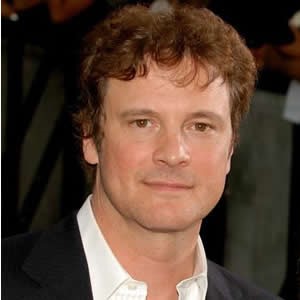
Shakira
singer
Arabic, English, Italian, Portuguese, Spanish
Colombian singer, Shakira, is of Spanish and Italian ancestry, and is fluent in both languages. The pop star is also fluent in Portuguese, Arabic, and English.
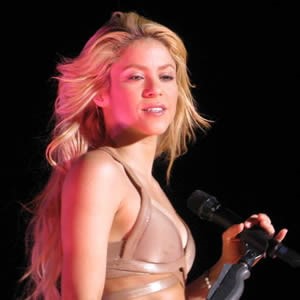
Will Smith
actor
English, Spanish
Will Smith speaks Spanish fluently. After his role in Seven Pounds, when Will Smith played a fluent Spanish-speaking role, fans were delighted to see that Smith was very well-versed in the language, and pulled off the character extremely well. Smith gave his first interview in Spanish in 2000, and still does them presently.
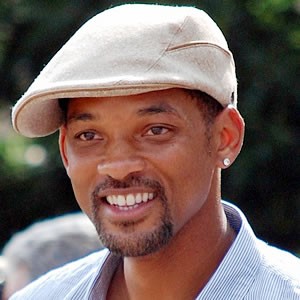
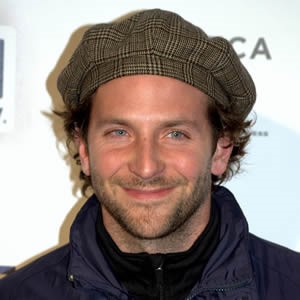
Bradley Cooper
actor
English, French
Bradley Cooper’s language skills remained relatively unknown until a 2011 interview that was promoting The Hangover 2, where he gave the whole interview in fluent French. Cooper picked up the language while enrolled in a study abroad program in college. Not thinking about becoming an actor or part of the bilingual celebrities pack back in his college days, Cooper rather spent his time as an exchange student in France, learning the language, and probably picking up the girls who fainted at his feet when he even glanced in their direction. When asked why French, he said: ‘When I was a kid, I remember watching Chariots of Fire,’ ‘And French is the official language of the Olympics. So there’s a scene where a guy was speaking French and I thought, ‘Man, that sounds so cool. I want to learn French.’
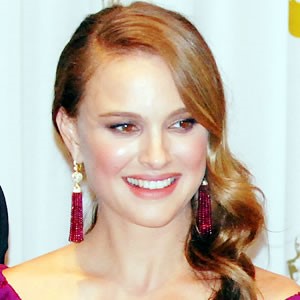
Natalie Portman
actress
English, German, Hebrew, Japanese, Spanish
One of the most stunning bilingual celebrities around, Natalie Portman is actually a multilingual star who has several languages under her belt. The Oscar-winning actress is fluent in Japanese, German and Spanish, also gets away with a light sprinkling of French, even though it’s not fluent, and sometimes gives interviews in her native language Hebrew.
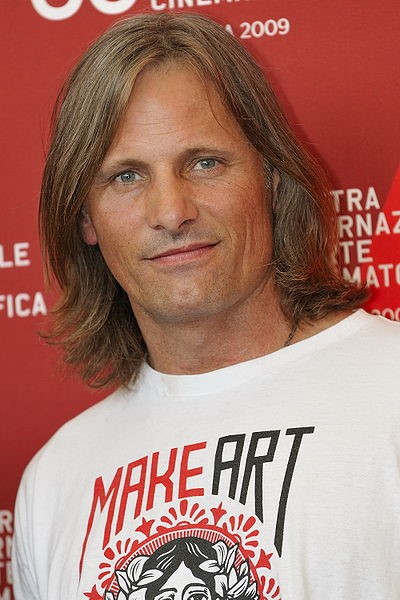
Viggo Mortensen
actor
Danish, English, French, Italian, Norwegian, Spanish, Swedish
The origins of Viggo Mortensen’s name may seem difficult to place, which makes sense when one considers the actor’s background. Born to an American mother and Danish father, who met in Norway, Viggo lived in Venezuela, Denmark and Argentina, all before the age of eleven. Thereafter, he moved to New York. Viggo’s globe-trotting childhood has afforded him fluency in English, Danish and Spanish, conversational ability in French and Italian and an understanding of Swedish and Norwegian.
Hugh Laurie
actor
English, French, German, Spanish
James Hugh Calum Laurie, known as Hugh Laurie, is an English actor, comedian, writer, musician and director. He speaks French, German and Spanish and learned all three at the Dragon School and Eton. He said in an interview that he’d like to be fluent in Italian because ‘it’s a beautiful language’.

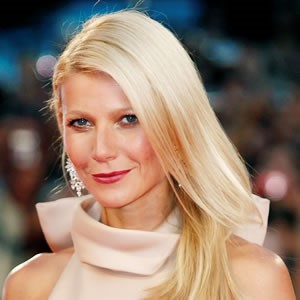
Gwyneth Paltrow
actress
English, French, Spanish
Gwyneth Paltrow speaks fluent Spanish. She learned the language while spending a year as a foreign exchange student during her high school years. She says she fell in love with the country and vowed to learn Spanish proficiently. She still spends a lot of time there, and true to word, now speaks it to a very high level. She says she’s trying to pass on her language skills to her children too. Besides being fluent in Spanish, Paltrow mastered French.
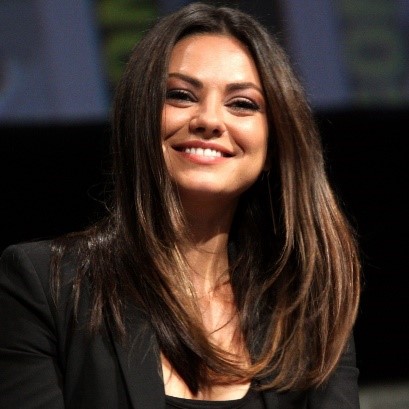
Mila Kunis
actress
English, Russian
Born in the now-Ukrainian city Czernowitz, Mila Kunis speaks fluent Russian, still speaking it at home with her grandparents and parents. She explains that, to her, the language is full of emotion and passion. One of the most interesting discoveries that her bilingualism has led her to, is the way that translators reformulate questions for her in interviews, either improving, or missing, the sense of the question. Ever mischevious, she also admits to waiting until the end of the journey to tell her drivers that she understands everything that they are saying about her!
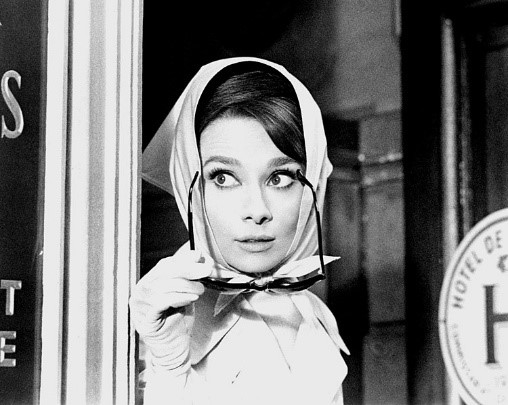
Audrey Hepburn
actress
Dutch, English, French, Italian, Portuguese, Spanish
She was not only an enduring symbol of elegance but also a language enthusiast. Besides her native English and Dutch, Audrey spoke French, Portuguese, Italian and Spanish fluently.
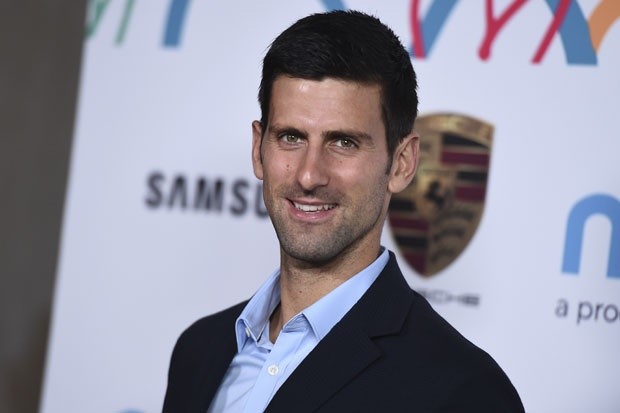
Novak Đoković
sportsman
Arabic, English, French, German, Italian, Serbian, Spanish
Not only has Djokovic conquered the world of tennis, this elite sportsman has also mastered six or seven languages. He modestly classifies this great feat as „enough to communicate with people“, nothing more and explains his passion for languages with a Serbian saying: “The more languages you know, the more is your worth as a person.” In fact, this spectrum ranges from French to English, including German, Italian, Arabic and Russian. Ever ambitious, he hopes to extend his knowledge of Chinese characters from a couple to 1000 or even 2000. He goes on to explain that the beauty lies in the endless learning process, seeing each misunderstanding as an opportunity to learn more.
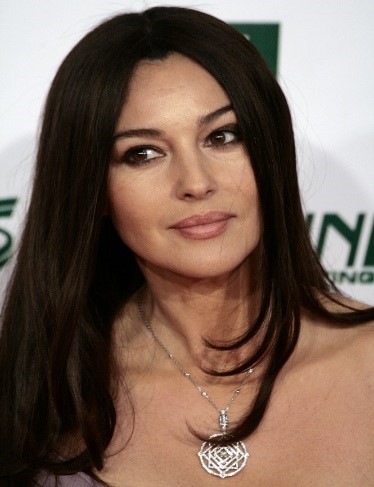
Monica Bellucci
actress
English, French, Italian, Serbian, Spanish
Besides being one of the most beautiful women in the world, Monica Bellucci also speaks a variety of languages. The Italian actress is fluent in English, French and Spanish, and knows some Serbian and Farsi as well. Since she has played in all these languages, it can be said that Monica is a real multilingual star. About her talent for languages she says: “I have a good ear, that’s for sure.”
J.K. Rowling
author
English, French
The author of the Harry Potter books was a French teacher prior to concentrating on her writing career. She also has French ancestry, and is said to speak impeccable French. Her knowledge of the language is actually evident in many of the fabricated words and names that she included in the stories, which have French as their basis. Examples are Beauxbatons, which means beautiful wands, Fleur Delacour from ‘fleur’ meaning flower and ‘delacour’ meaning ‘of the court’ and Malfoy, from the French phrase ‘mal foi’ (meaning bad faith).